Tomato paste and tomato sauce sit close together in a canned goods catalogue, and buyers often ask which one to put on an enquiry. The short answer is concentration: one is a cooked-down concentrate, the other a thinner product used closer to the table. An importer names the right line before asking for a quote or a sample.
The Two Lines as Listed
The range covers eight product lines: ketchup; tomato sauce; tuna; sardines; mackerel; seasonings; green beans; kidney beans. Tomato-based goods fall under that coverage, with ketchup and tomato sauce named as lines.
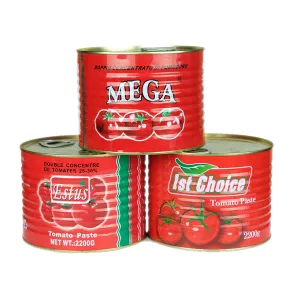
Listed tomato paste titles include "Manufacturer price 400g 800g Tomato Paste sachet canned", "Manufacturer 220L Tomato Paste in drum" and "High Quality Easy Open Double Concentrated Tin Tomato Paste 28-30% Brix in Canned".
Read the two lines as a family rather than as one product with two names. A buyer sourcing tomato paste for repacking or for a kitchen account and a buyer sourcing tomato sauce for retail are asking for different goods from the same side of the catalogue. For the paste line on its own, see /tomato-paste/.
Concentration: How the Two Differ
Tomato paste is a concentrated product. Tomatoes are cooked down and much of the water is driven off, which leaves a dense, deep-red paste that is usually sold in tins, sachets or drums. Because so much water has been removed, a small amount goes a long way in cooking, and the paste is normally treated as an ingredient rather than as a finished sauce.
Tomato sauce is a thinner, ready-to-use product. It is formulated to be poured or spooned directly onto food or into a pan without further dilution, so it carries more liquid and a lighter body than paste. Where paste is a building block, sauce is closer to a finished article on the shelf.
The practical consequence for a buyer is that the two are not interchangeable in a recipe or on a retail shelf. Substituting one for the other changes both the yield in the kitchen and the pack presentation in the store.
Uses and Buying Channels
Paste usually moves into food manufacturing, catering and repacking, where it is used as a base for sauces, soups and stews. Drum formats suit processors who use volume; tins and sachets suit smaller kitchens and retail packs.
Sauce tends to move through retail and food service, sold as a finished condiment or cooking sauce for household and restaurant use. Buyers in this channel usually care about pack size, label presentation and how the product pours.
Prices depend on the format, the pack size, the order volume and the delivery terms, so the useful first step is to state what you need and ask for a quotation. The enquiry form at /inquiry/ or [email protected] reaches the supplier directly.
Side-by-Side Comparison
| Point | Tomato paste | Tomato sauce |
|---|---|---|
| Concentration | Cooked down to a dense concentrate; water removed | Thinner, ready-to-use; carries more liquid |
| Typical use | Ingredient for manufacturing, catering and repacking | Finished condiment or cooking sauce for retail and food service |
| What to specify in an enquiry | Pack format from the listed range (sachet, tin, drum), Brix level where listed, order volume, destination | Pack size, label and brand requirement, order volume, destination |
| Next step | Request a quote or sample via /inquiry/ | Request a quote or sample via /inquiry/ |
Pack sizes, Brix levels and label requirements vary by order, so confirm them in writing before booking freight. Buyers who want a closer look at paste grades can read /how-to-choose-tomato-paste/, and those weighing sauce against ketchup can read /ketchup-tomato-sauce/.
Confirm the Details by Enquiry
Decide first which line your market needs: a concentrate for manufacturing and repacking, or a ready-to-use sauce for retail and food service. Then send the pack format, the volume you expect to move and the destination port. State in the enquiry that you would like a quotation, and request a sample if you need one before ordering.
Use the enquiry form at /inquiry/ or write to [email protected]. Certificates available upon request.
Ask Which Line Fits Your Order
Describe your channel and ask which of the compared lines to specify.