Many importers move from distributing other suppliers' cans to selling a label of their own. The work follows a sequence: pick the range, settle the packaging and label, plan the volumes and markets, then brief the design.
Why Importers Build Their Own Brand
An importer who sells only other suppliers' brands competes on price and shelf position. A private label puts the importer's name on the can, so the retail relationship, repeat purchase and shelf placement belong to the importer rather than to a third-party brand owner. The importer sets the range, the pack sizes and the label, and can adjust them as the market shifts.
The commercial logic is straightforward. A own brand lets a distributor build recognition that does not disappear when a supply agreement ends. It also lets the importer decide which products sit together on the shelf, rather than accepting a supplier's fixed assortment. For buyers serving retail chains, wholesale markets or food service, a coherent own-brand range is often easier to list than a mixed bag of third-party labels.
The work is not only marketing. A private label program ties together product selection, packaging, artwork approval and shipping schedules, and each of those steps needs a decision before the first order is placed. Importers who plan the sequence early spend less time correcting labels and pack formats later.
Choosing the Range
Start with the products the market already buys. A range built around everyday staples sells more predictably than a range built around novelty. Look at what moves through the importer's own accounts, then group the products into a small, coherent set rather than a long, thin list.
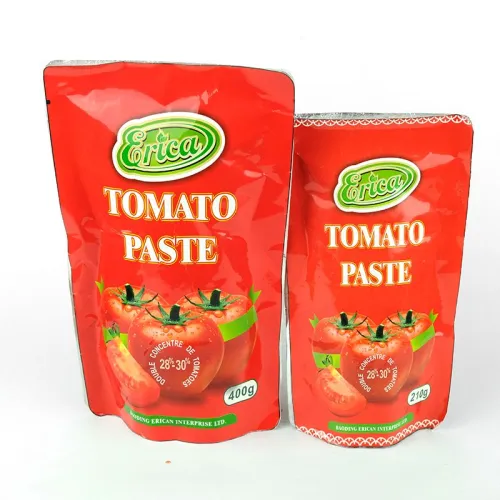
Hebei Erican Enterprise Ltd. covers 8 product lines: ketchup; tomato sauce; tuna; sardines; mackerel; seasonings; green beans; kidney beans. The tomato sauce line includes tomato paste.
A range decision also covers pack format. Cans, jars and sachets each suit different retail channels and different price points. The importer should decide the format per product before designing the label, because the label area, print method and carton configuration all follow from the pack.
Two practical checks help narrow the range. First, ask which products the importer can sell through existing accounts without extra promotion. Second, ask which products share a similar pack size, so the range looks consistent on the shelf and the carton planning stays simple. A tight range that ships well usually beats a broad range that ships awkwardly.
For buyers who want to go further into own-brand supply, the private label canned food page sets out the service in more detail.
Packaging and Label Decisions
Packaging decisions fall into two layers: the container and the print. The container decision covers can size, lid type, label format (wrap label, printed can or sleeve) and the outer carton. The print decision covers the artwork, the language panels, the barcode placement and the legal text required by the destination market.
Artwork should be prepared for the exact print method and the exact container. A design that looks right on a flat screen can lose contrast on a printed can, and small type can disappear on a curved surface. Importers should ask for a printed proof or a sample label before approving a full run, and should check the barcode and the language panels against the retail requirements of the target market.
The outer carton matters as much as the can. Carton dimensions, print and pallet pattern affect freight cost and warehouse handling. Importers who plan the carton at the same time as the label avoid repacking later.
Keep a written record of every approved element: container, label artwork version, carton print and language panels. When a repeat order is placed, the record is the reference point. This is ordinary practice, but it is the step most often skipped when a range grows quickly.
- Container: can or jar size, lid type, label format.
- Label: artwork version, language panels, barcode, print method.
- Carton: dimensions, print, pallet pattern.
- Approval: printed proof or sample label before the full run.
The Listed Design Service and How an Enquiry on Scope Works
Hebei Erican Enterprise Ltd. lists a free private label design service. The scope of that design work is confirmed by enquiry.
The company also uses the wording OEM Brand in its product titles. The scope of the service is confirmed by enquiry.
A scope enquiry works best when the importer brings a short brief: the chosen product lines, the pack format, the target market and the label direction. With that brief, the supplier can say what the design service covers, what artwork the importer must supply and what needs to be approved before an order. Buyers who want the full own-brand route can read the canned food OEM ODM page alongside this one.
Certificates available upon request.
Hebei Erican Enterprise Ltd. is a Verified Supplier on Alibaba.
Please confirm the minimum order quantity with the supplier before placing an order.
Please confirm the lead time with the supplier before placing an order.
Cost factors for a private label run include the container, the label print, the carton, the order volume and the shipping route. Prices depend on those factors, so the practical step is to send the brief through the enquiry form at /inquiry/ or to [email protected] and ask for a quotation against it.
Planning Volumes and Markets Before the First Order
Volume planning starts from the sales the importer expects to make in the first selling period, not from the volume the supplier prefers to run. Set a first order that covers the launch and a reasonable refill, then plan the repeat order before the first shipment lands. This keeps the shelf stocked without tying up capital in slow-moving stock.
Market planning covers the label language, the retail channel and the route to market. A product sold through wholesale markets may need different pack sizes and carton print from the same product sold through a supermarket chain. Importers should map the channels first, then choose the pack for each channel.
A simple launch plan keeps the first order manageable: one or two products, one pack format, one label design, one market. Once the first run sells through, the range can widen. Importers who try to launch a full range at once often spend the first season correcting packaging instead of selling.
Start With an Enquiry
Building a canned food brand begins with a clear brief and a supplier who can work to it. Send the product lines, pack format, target market and label direction through the enquiry form at /inquiry/ or by email to [email protected]. Ask for a quotation, a sample and a specification sheet against the brief, and confirm the order terms before the first run.
Enquire for a Quotation
Importers are welcome to enquire for a quotation for their specification.